GLP-1 medications have changed the weight loss conversation.
Appetite reduces. Cravings quiet down. Portions shrink almost effortlessly. And somewhere along the way, people start believing that diet doesn’t matter as much anymore. GLP-1 medications have changed the weight loss conversation. Whether you’re on Wegovy, Ozempic, or Zepbound, or just considering the jump, there’s one thing no one tells you: the medication is the tool, but your nutrition is the architect.
When you’re eating less, what you eat starts to matter more than ever.
First, What GLP-1 Is Really Doing in Your Body
GLP-1 medications don’t just reduce your appetite. They:
- Slow down how quickly your stomach empties
- Change hunger and fullness signals
- Reduce food noise and reward-driven eating
- Improve insulin response
So yes, you eat less. But it’s not just a quantity shift but a physiological shift in how your body experiences food. And that’s exactly why your diet needs to adapt.
The Biggest Mistake
People assume: “I’m not hungry, so I don’t need to eat much.” So their day ends up looking like:
- Coffee
- A few bites here and there
- Maybe one small meal
And technically, weight drops. But underneath that?
- Protein intake drops
- Muscle mass declines
- Energy dips
Hair fall, weakness, poor recovery start creeping in
GLP-1 does not protect your muscle. Your diet does.
What the “GLP-1 Diet” Should Actually Look Like
Taking a GLP-1 without a solid nutritional strategy is like buying a Ferrari and never changing the oil. Sure, it looks fast, but eventually, the engine is going to stall. If you want the weight loss without the "Ozempic face," the muscle wasting, or the constant fatigue, you need a plan that matches your new biology.
Here is the clinical breakdown of how to eat while on a GLP-1. Think of it as a strategy for eating less, but better.
1. Protein is Non-Negotiable
When you lose weight rapidly, your body doesn't just burn fat, it looks at your muscle mass like an all-you-can-eat buffet. Losing muscle is the worst thing you can do for your metabolism.
It happens because:
- It’s more filling
- It takes more effort to eat
But this is exactly what your body needs to preserve muscle, maintain metabolism, and keep you functional.
To keep your "engine" running and your skin looking firm, you must prioritize protein.
The Goal: Aim for 1.2g to 1.5g of protein per kilogram of body weight.
The Strategy: Eat your protein first. Since GLP-1s make you full incredibly fast, you need to secure the "building blocks" before your stomach decides it's finished.
Instead of forcing large meals, do this:
- Smaller, repeated protein exposures
- Easy-to-eat options (curd, eggs, soft paneer, smoothies, dals)
Because right now, consistency matters more than volume.
2. Respect the Slower "Exit"
GLP-1 medications work by slowing down gastric emptying. This means food stays in your stomach significantly longer. This is great for satiety, but it’s a total jump scare if you eat the wrong things.
Avoid the "Heavy" Stuff: Greasy, fried, or ultra-processed foods will sit in your stomach like a brick, leading to the dreaded "sulfur burps" and nausea.
Small Wins: Transition from three large meals to 4–5 "micro-meals." It’s easier on your digestive system and keeps your blood sugar stable.
3. Every Bite Has to Work Harder
When your total intake is low, your margin for “empty eating” shrinks. A few biscuits and tea might feel like light eating. But nutritionally? It’s almost nothing.
This is where the shift needs to happen: From “How much did I eat?”, to “What did I actually give my body?”
4. Carbs Aren’t the Problem.
Because appetite is low, people often cut carbs even further.
Result is:
- Low energy
- Brain fog
- Poor workout performance
- Increased fatigue
Carbs, when used well, actually improve sustainability.
Think of:
- Small portions
- Easy-to-digest forms
- Paired with protein
This is about using food groups intelligently rather than eliminating them.
5. Side Effects Are Dietary, Not Just Medicinal
A lot of GLP-1 discomfort is blamed on the drug. But diet plays a huge role.
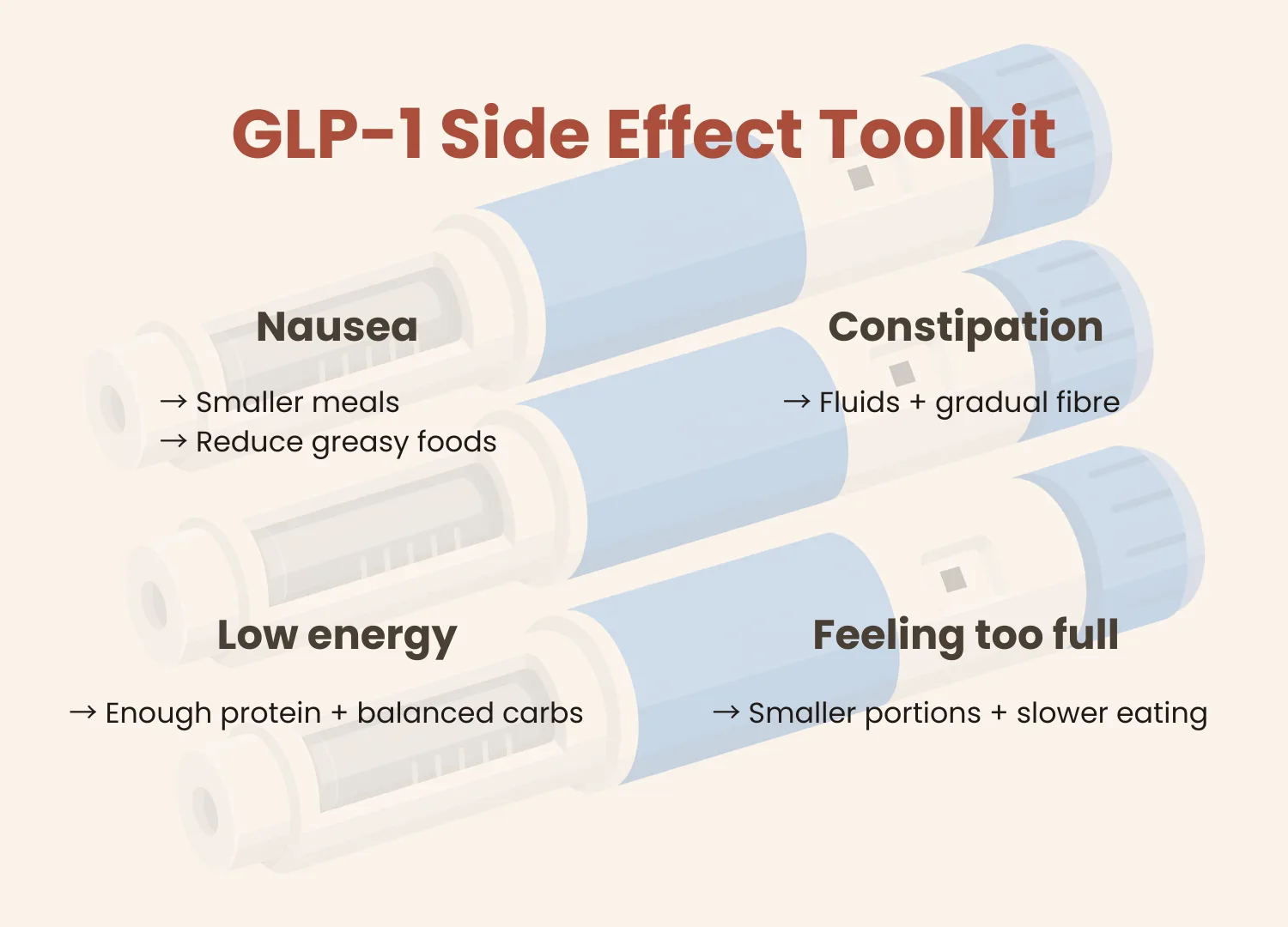
- Nausea: often worse with large, heavy, high-fat meals
- Bloating: triggered by overeating in one sitting
- Constipation: very common with low intake + low hydration
What helps:
- Smaller, simpler meals
- Not forcing food, but not skipping entirely either
- Gentle fibre, not aggressive loading
- Consistent hydration (even when you’re not thirsty)
6. Constipation: the role of Fiber and Hydration
Constipation is the most common side effect people deal with on these meds. Because things are moving slower, you need to be proactive. GLP-1s can actually dampen your thirst signals. You might forget to drink water. Set a timer if you have to. Aim for 2.5 to 3 liters daily.
Don’t just load up on fiber supplements overnight (hello, bloating). Gradually increase your intake of chia seeds, lentils, raspberries, and leafy greens. Think of fiber as the broom that keeps the system moving.
7. Solving the "Food Noise" Silence
One of the wildest parts of this journey is the sudden silence in your brain where "What’s for dinner?" used to live. When the food noise stops, eating can feel like a chore.
Mechanical Eating: On the days when you have zero appetite, you have to eat "mechanically."
Nutrient Density: Since your volume of food is lower, the quality of every bite matters more than ever. If you’re only eating 1,200 calories, make sure those calories are packed with micronutrients (like colorful veggies and healthy fats like avocado or walnuts).
Who Needs to Be Extra Careful
Some people can “get away” with sloppy eating for a while. Others can’t. You need to be more intentional if you:
- Already have low muscle mass
- Have a long history of dieting
- Are dealing with PCOS or metabolic issues
- Are using GLP-1 without proper guidance
Because for you, the margin of error is smaller.
What a Day Might Look Like (In Real Life)
Not perfect. Not rigid. Just realistic.
A late, protein-focused breakfast that’s easy to eat
A light, balanced lunch (not heavy, not skipped)
A small snack to maintain energy
An early, simple dinner
Some days will feel like less. Some slightly more. The goal is consistency without overwhelm and not perfection.
The Part No One Talks About
GLP-1 quiets hunger. But it doesn’t teach you how to eat well. And over time people:
- Lose touch with hunger cues
- Start under-eating unintentionally
- Rely completely on the medication instead of building structure
Which becomes a problem later. Because eventually, the medication is reduced or stopped. And if there’s no system in place, everything rebounds.
The Real Goal
GLP-1 is a powerful tool. But it’s still just a tool. The outcome depends on how you use it. You don’t just want weight loss. You want:
- Muscle preserved
- Energy stable
- Metabolism supported
- Habits that don’t fall apart later
Because weight loss without structure is temporary.
The Bottom Line
GLP-1s aren't a "get out of jail free" card for your diet, they are a high-tech assist. By focusing on your nutrient intake, you’re ensuring that the weight you lose stays off and that you feel as good as you look.
If you’re on GLP-1 or planning to start, a personalised nutrition strategy can help you lose weight while protecting your health, energy, and muscle. Book your consultation today.
0 Comments