
Coffee is one of the most widely consumed beverages in the world. For many people, it is simply a morning ritual, a cup to wake up, focus, and begin the day. But in the past decade, scientific research has revealed something remarkable: coffee may also be one of the most beneficial beverages for liver health. Among individuals with fatty liver disease, regular coffee consumption, particularly black coffee, has been consistently associated with lower liver enzyme levels, reduced inflammation, and a lower risk of liver fibrosis.
In fact, hepatologists increasingly refer to coffee as a “protective beverage” for the liver.
But why does coffee have this effect?
And why specifically black coffee?
Let’s examine the science behind coffee’s role in fatty liver disease.
Understanding Fatty Liver Disease
Fatty liver disease occurs when excess fat accumulates within liver cells (hepatocytes). When more than 5% of the liver’s weight consists of fat, the condition is classified as fatty liver. The modern medical term used today is Metabolic Dysfunction–Associated Steatotic Liver Disease (MASLD) — previously known as Non-Alcoholic Fatty Liver Disease (NAFLD).
MASLD is strongly associated with:
- Insulin resistance
- Obesity
- Metabolic syndrome
- Type 2 diabetes
- Dyslipidemia
In its early stage, fatty liver may not produce noticeable symptoms. However, if metabolic stress continues, the condition can progress to:
- Steatohepatitis (MASH): inflammation and liver injury
- Fibrosis: formation of scar tissue
- Cirrhosis: advanced scarring that affects liver function
Because MASLD is largely driven by metabolic dysfunction, diet and lifestyle interventions remain the cornerstone of treatment. And interestingly, coffee has emerged as a potential dietary ally.
The Evidence: Black Coffee and Liver Enzymes
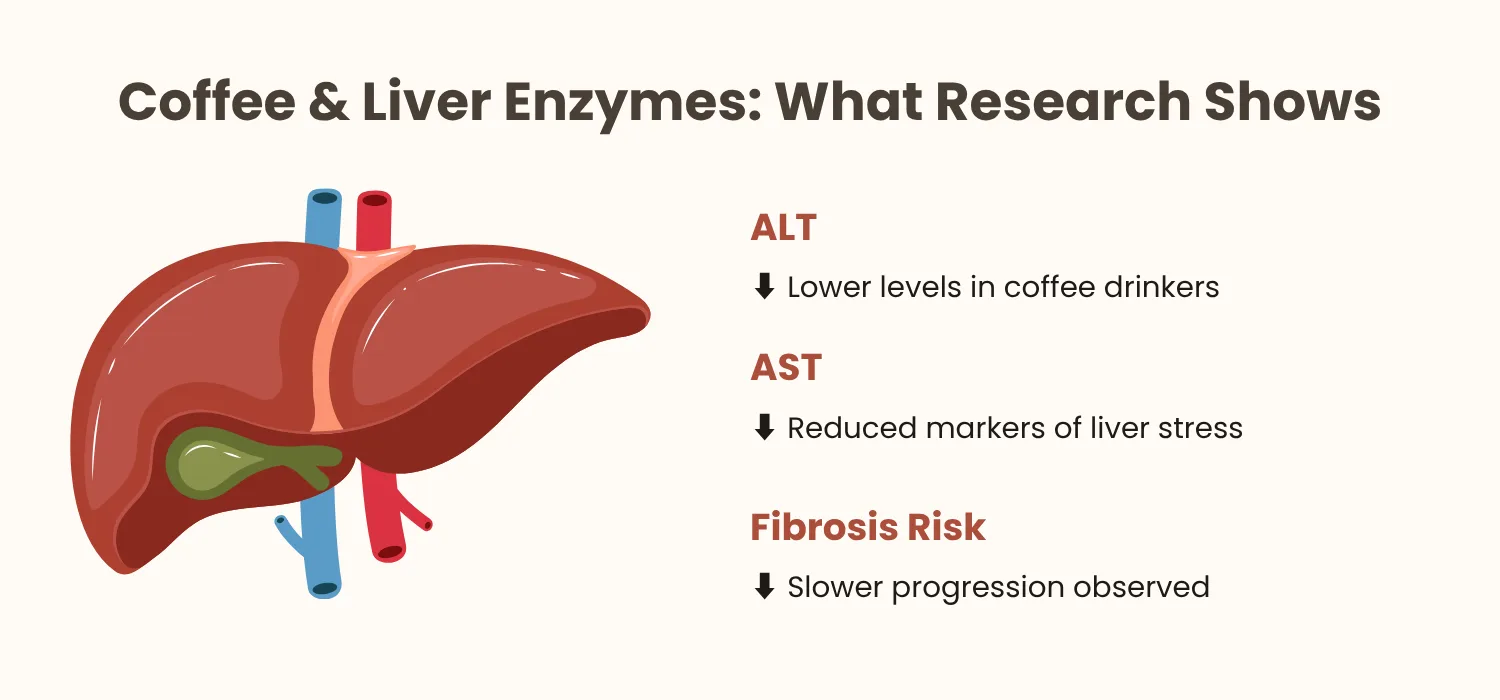
Elevated liver enzymes such as ALT (Alanine Aminotransferase) and AST (Aspartate Aminotransferase) are common markers of liver stress. Multiple epidemiological studies have shown that regular coffee drinkers tend to have lower liver enzyme levels compared to non-drinkers.
Research findings consistently show that individuals who consume 2–3 cups of coffee per day often demonstrate:
- Lower ALT levels
- Reduced markers of liver inflammation
- Lower risk of developing liver fibrosis
- Slower progression of fatty liver disease
Interestingly, these benefits appear strongest with black coffee rather than sugar-laden coffee beverages.
What Makes Coffee Beneficial for the Liver?
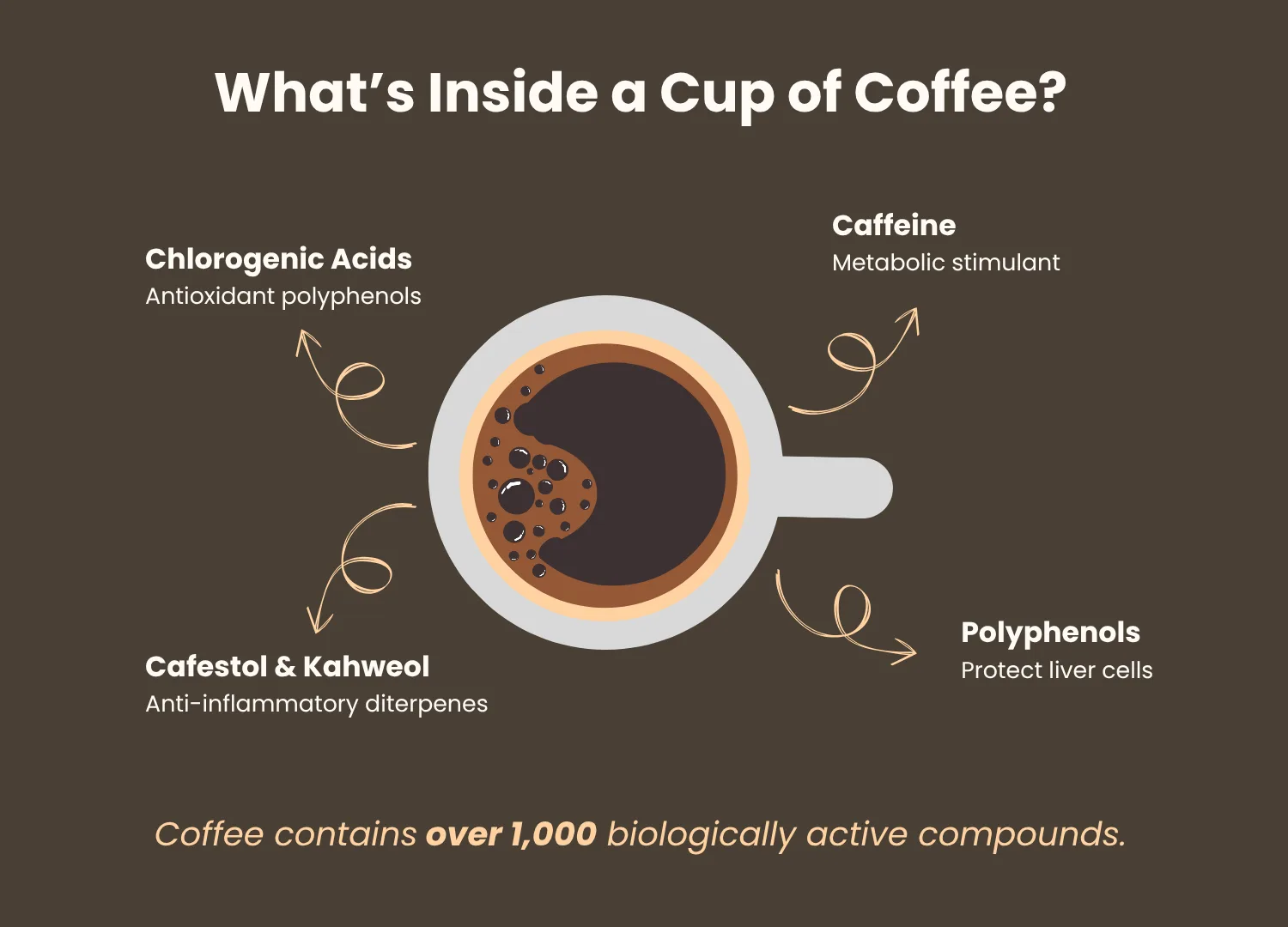
Coffee is far more than just caffeine. It is a complex beverage containing over 1,000 bioactive compounds, many of which exert metabolic and antioxidant effects.
Several key components are believed to contribute to coffee’s liver-protective properties.
1. Chlorogenic Acids: Powerful Antioxidants
Coffee is one of the richest dietary sources of chlorogenic acids (CGAs), a class of polyphenols with strong antioxidant activity.
Chlorogenic acids help:
- Reduce oxidative stress within liver cells
- Improve glucose metabolism
- Enhance insulin sensitivity
- Reduce fat accumulation in hepatocytes
Oxidative stress is a major driver of fatty liver progression. By neutralizing reactive oxygen species, chlorogenic acids may protect liver tissue from damage.
2. Black Caffeine and Fat Metabolism
Caffeine influences metabolic pathways that regulate lipid metabolism in the liver.
Studies suggest caffeine may:
- Increase fat oxidation
- Reduce hepatic fat accumulation
- Improve energy expenditure
Some research indicates caffeine may inhibit the activation of hepatic stellate cells, which play a key role in liver fibrosis. This means caffeine could potentially slow the scarring process in chronic liver disease.
3. Diterpenes: Cafestol and Kahweol
Coffee beans contain compounds known as diterpenes, particularly cafestol and kahweol.
These compounds demonstrate:
- Anti-inflammatory effects
- Antioxidant activity
- Potential anti-fibrotic effects in the liver
However, diterpene levels depend on the brewing method.
Unfiltered coffee (such as French press or Turkish coffee) contains higher concentrations, whereas paper-filtered coffee removes most diterpenes. Even with filtration, coffee still retains significant liver benefits due to its polyphenols and caffeine.
4. Black Coffee and Liver Fibrosis
One of the most compelling findings in liver research is coffee’s association with reduced liver fibrosis.
Several observational studies have found that individuals who drink coffee regularly show:
- Lower rates of fibrosis progression
- Reduced risk of cirrhosis
- Lower incidence of liver cancer in chronic liver disease
The proposed mechanism involves coffee’s ability to:
- Reduce inflammatory signaling pathways
- Suppress stellate cell activation
- Improve metabolic regulation
In other words, coffee may not only protect the liver but slow the progression of liver damage.
Why Black Coffee Works Better
The liver benefits associated with coffee are most strongly observed with plain black coffee. When coffee beverages are heavily modified, for example with syrups, sugar, cream, or whipped toppings, the metabolic impact changes significantly. High-sugar coffee drinks can contribute to:
- Excess calorie intake
- Increased insulin resistance
- Greater hepatic fat accumulation
For individuals managing fatty liver disease, these additions can counteract coffee’s potential benefits. Black coffee, on the other hand, provides:
- Polyphenols
- Antioxidants
- Metabolic stimulation
— without additional sugar or excess calories.
How Much Coffee Is Beneficial?
Research suggests that the beneficial range for liver health is typically 2–3 cups of coffee per day. Within this range, studies have observed:
- Lower liver enzyme levels
- Reduced fibrosis risk
- Improved metabolic markers
However, tolerance varies between individuals. Some people may experience:
- Sleep disturbances
- Increased anxiety
- Gastrointestinal discomfort
Therefore, coffee intake should always be adjusted according to individual tolerance.
Does Decaffeinated Coffee Help?
Interestingly, some studies suggest decaffeinated coffee may also offer liver benefits, although the effects appear somewhat weaker compared to caffeinated coffee.
This indicates that polyphenols and antioxidants, not just caffeine, contribute to coffee’s protective effects.
Still, caffeine appears to play a significant role in fibrosis prevention and metabolic regulation.
Coffee Is Helpful, But Not a Cure
Despite its benefits, coffee should not be seen as a treatment for fatty liver disease.
MASLD remains a metabolic condition, and its management depends primarily on:
- Weight management
- Insulin sensitivity
- Balanced nutrition
- Physical activity
- Adequate sleep
- Reduced intake of ultra-processed foods and excess sugars
Coffee can be considered a supportive dietary component, but it cannot replace fundamental lifestyle interventions.
The Bottom Line
Coffee has evolved from a simple beverage into one of the most fascinating nutritional topics in liver health research.
Scientific evidence increasingly suggests that regular consumption of black coffee is associated with lower liver enzyme levels, reduced inflammation, and slower progression of fatty liver disease. The combination of chlorogenic acids, caffeine, and other bioactive compounds appears to support liver metabolism and protect against oxidative stress.
For individuals with fatty liver, a daily cup or two of plain black coffee may be more than just a morning habit, it may be a small but meaningful step toward better liver health.
0 Comments